Meditation & Ayurveda
In Ayurvedic tradition, meditation and breathing practices form part of the daily routine (dinacharya). Breathing practices are called pranayama, from prana, the life energy carried in the breath.
Some studies of yoga-based practices report changes in stress, anxiety and sleep. The evidence is limited, and these are research findings, not treatment advice. Clinical stress is covered in Chronic Stress & Burnout.
Visit us in Sector 75, Noida
C8, 5th Floor (Medical Floor), C-Tower, Spectrum Mall, Phase 1, Sector 75, Noida, Uttar Pradesh 201301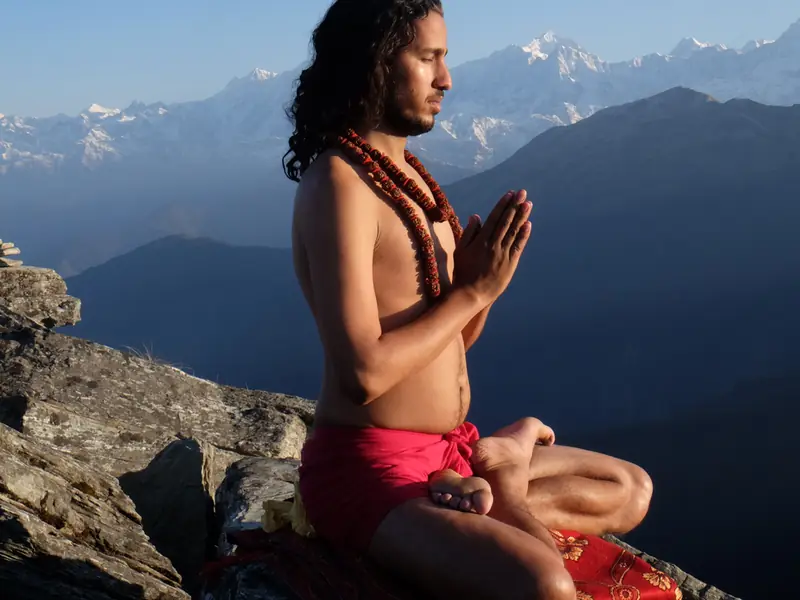
How Ayurveda Understands It
In Ayurvedic tradition, the mind (manas) is linked with the doshas, the body’s governing energies: Vata (movement), Pitta (heat) and Kapha (structure). A 2001 review lists meditation among the supportive measures of Ayurvedic care, which also include Panchakarma, a set of cleansing treatments [1]. It is a review of practice, not a trial. It suggests great potential for integrating Ayurvedic therapies into the healthcare system in the United States [1].
How We Help
- An Ayurvedic lifestyle consultation covers daily routine. The first Ayurvedic consultation is free.
- YogiShri Govind Niranjan, our Yoga & Wellness Expert, can advise on suitable practice.
- Psychological assessment and counselling are available in English and Hindi.
Who Should Not Start Without Advice
Speak to a doctor or psychiatrist before starting if you have:
- Severe trauma or PTSD, where intense inner focus or breath holding can bring back distressing memories.
- A history of psychosis, where intense practice should start only with a psychiatrist’s agreement.
- Heart disease, high blood pressure, epilepsy, recent surgery or pregnancy, before any forceful breathing.
Precautions & When to See a Doctor
Forceful breathing can cause dizziness or breathlessness. Stop and rest if this happens. Do not stop prescribed medicines for anxiety, sleep or any other condition without speaking to your prescribing doctor. Ayurvedic care here is complementary to medical, psychiatric and specialist care.
See a doctor promptly if anxiety, low mood or sleep problems persist or affect daily life, or if you have panic attacks. Seek medical advice at once if you hear voices, see things others do not, or feel confused or cut off from reality. Trauma memories or flashbacks that become more frequent or distressing after practice also need a doctor’s review. Stop and see a doctor if palpitations or dizziness do not settle after rest. Seek urgent care for chest pain, fainting or breathlessness that does not settle. Loud snoring or pauses in breathing during sleep need medical assessment.
If you are in crisis or thinking of harming yourself, call Tele-MANAS 14416 (free, 24×7) or 112 now.
Learn More
Tap a topic to read more.
What the Evidence Shows
Only a few studies are cited here. Two examine yoga-based practices, one as a meta-analysis and one as a randomised trial. The third is a review of Ayurvedic healthcare. The evidence has methodological limits, and none of these studies is proof that these practices treat a medical or psychiatric condition.
Stress and anxiety
- A 2026 systematic review and meta-analysis of Yoga Nidra (“yogic sleep”, a guided relaxation practice) reported moderate-to-large effects on stress, anxiety and depression. The authors say these are likely inflated estimates, given low methodological quality and variability in intervention delivery [2].
Sleep
- In a randomised controlled trial of people with insomnia, the authors ranked yoga first for reducing stress and improving sleep, followed by Ayurvedic practice and a control group [3].
Prepared by the AyurSoul Healthcare team from the published research listed below. Medical review by Dr. Hemlata Soni, BAMS is in progress. This page is for education and does not replace individual medical advice. Medical disclaimer.
Frequently Asked Questions
Will meditation replace my medicines?
No. Do not stop or change prescribed medicines without your doctor.
How much should I practise?
No amount is set here. Start with a short, gentle practice that suits you, and check with your doctor or at a consultation before increasing it.
Is forceful breathing suitable for everyone?
No. Forceful breathing practices need advice first.
Clinical Research
3 studies: 1 systematic review / meta-analysis, 1 randomised trial, 1 review article.
Show the 3 studies
Numbers in the text refer to this list. Each study is labelled by type: systematic reviews and randomised trials are stronger evidence than pilot studies or single case reports.
- Mishra L, Singh BB, Dagenais S. Healthcare and disease management in Ayurveda. Alternative therapies in health and medicine, 2001. Review article PubMed
- Ghai S, Odyniec P, Ghai I. Effects of Yoga Nidra on Stress, Anxiety, and Depression: A Systematic Review and Meta-Analysis. Annals of the New York Academy of Sciences, 2026. Systematic review / meta-analysis PubMed
- Verma K, Singh D, Srivastava A. Comparative impact of yoga and ayurveda practice in insomnia: A randomized controlled trial. Journal of education and health promotion, 2023. Randomised controlled trial PubMed