Abhyanga (Ayurvedic Oil Massage)
Abhyanga is a whole-body massage with warm, medicated oil, performed with long, rhythmic strokes. It is one of the most widely used Ayurvedic therapies, both on its own and as part of Panchakarma preparation. Classical texts recommend regular oil massage as part of the daily routine to nourish the body and calm Vata.
Visit us in Sector 75, Noida
C8, 5th Floor (Medical Floor), C-Tower, Spectrum Mall, Phase 1, Sector 75, Noida, Uttar Pradesh 201301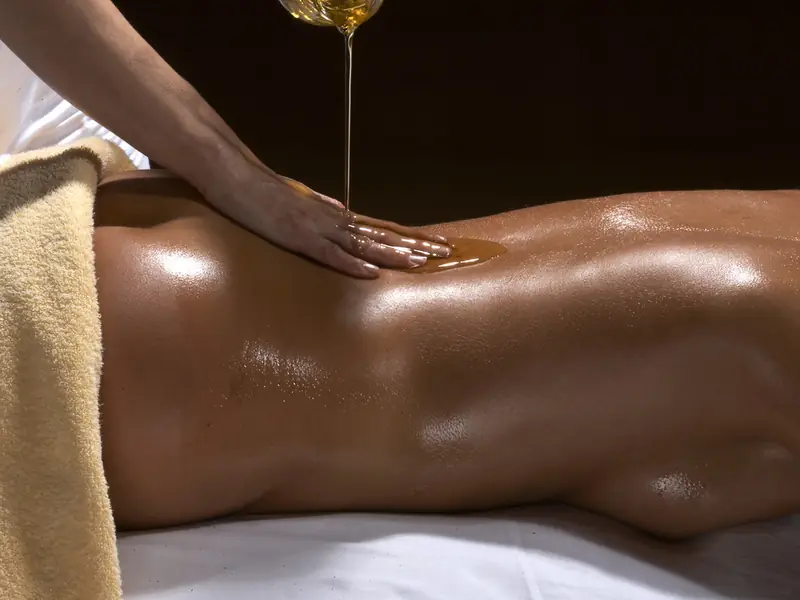
Who It May Suit
- Stress, tension and difficulty relaxing
- Muscle tightness and stiffness from long hours of sitting
- Dry skin
- Preparation for Panchakarma procedures
- General wellbeing and recovery
Precautions & Safety
Abhyanga is avoided during fever, acute indigestion, immediately after meals, and on broken or infected skin. Tell us about skin allergies, heart conditions or pregnancy (oils and technique may need to change). Oily floors are slippery, so take care after treatment.
Learn More
Tap a topic to read more.
What to Expect
- The doctor chooses an oil to suit your constitution and concern.
- You lie on a treatment table; warm oil is applied and massaged over the whole body for about 45 to 60 minutes.
- Abhyanga is often followed by herbal steam (Swedana).
- You rest briefly, then take a warm shower as advised.
What the Evidence Shows
- In a pilot study, Abhyanga reduced subjective stress and lowered heart rate, with blood pressure benefits in people with pre-hypertension [1].
- In a 2026 trial, daily self-massage combined with stretching improved hamstring flexibility and reduced muscle stiffness more than stretching alone in people who sit for long periods [2].
- For dry skin, a randomised trial found coconut oil as effective and safe as mineral oil as a moisturiser [3], and reviews describe how different plant oils affect the skin barrier [4].
These are mostly small studies; larger trials are needed.
Prepared by the AyurSoul Healthcare team from the published research listed below. Medical review by Dr. Hemlata Soni, BAMS is in progress. This page is for education and does not replace individual medical advice. Medical disclaimer.
Frequently Asked Questions
How often should I have Abhyanga?
As a therapy, often as a course of several sessions. For daily self-care, a short self-massage at home can be part of your routine.
Which oil will be used?
The doctor chooses it for your constitution and concern, for example sesame-based oils for Vata or cooling oils for Pitta.
Can I have Abhyanga during my period?
Many people prefer to avoid it during heavy bleeding. Please discuss this when booking.
Clinical Research
4 studies: 2 randomised trials, 1 pilot study, 1 review article.
Show the 4 studies
Numbers in the text refer to this list. Each study is labelled by type: systematic reviews and randomised trials are stronger evidence than pilot studies or single case reports.
- Basler AJ. Pilot study investigating the effects of Ayurvedic Abhyanga massage on subjective stress experience. Journal of alternative and complementary medicine (New York, N.Y.), 2011. Pilot / feasibility study PubMed
- John TJ, Dileep A, Madhavan VR, et al.. Effect of Nitya-Abhyaṅga (self-massage) combined with stretching on hamstring extensibility, muscle stiffness, and stretch tolerance in college students: a randomized controlled trial. Frontiers in sports and active living, 2026. Randomised controlled trial PubMed
- Agero AL, Verallo-Rowell VM. A randomized double-blind controlled trial comparing extra virgin coconut oil with mineral oil as a moisturizer for mild to moderate xerosis. Dermatitis : contact, atopic, occupational, drug, 2004. Randomised controlled trial PubMed
- Karagounis TK, Gittler JK, Rotemberg V, et al.. Use of "natural" oils for moisturization: Review of olive, coconut, and sunflower seed oil. Pediatric dermatology, 2019. Review article PubMed